Utah’s Push for Affordable Housing: What Gov. Cox Is Actually Doing — and Where Small Homes Fit
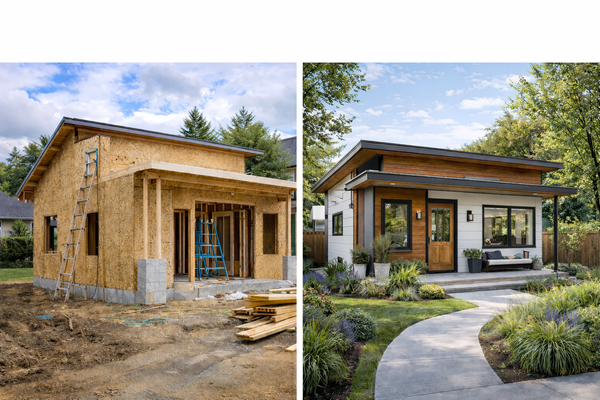
Small homes, ADUs, and tiny houses offer practical, cost-effective ways to expand Utah’s housing supply. They help first-time buyers, support workforce housing, and fit into neighborhoods, aligning with statewide goals for attainable homes. Learn more at Build-Small.com.

Housing affordability in Utah has deteriorated over the past several years as home prices and interest rates have climbed faster than wages across much of the state. In response, Governor Spencer Cox and the Utah Legislature have elevated housing supply and “attainable” homeownership to the top tier of state policy priorities.
The state’s current approach focuses less on a single housing type and more on a broad objective: build more homes, faster — especially smaller, lower-cost ones — while helping communities absorb growth.
Housing Supply as a State Priority
Utah’s housing strategy, led by the governor’s office in coordination with lawmakers, is centered on significantly increasing housing production over multiple years. Public statements and policy discussions have referenced large statewide unit targets through the late 2020s, with a specific emphasis on entry-level or “starter” homes as part of that mix.
Governor Cox has consistently framed housing affordability as more than a social issue. In his messaging, workforce housing shortages pose a direct threat to Utah’s economic competitiveness, making it harder for employers to recruit and retain workers and for families to stay in the communities where they work.
State Involvement Goes Beyond Messaging
Unlike past cycles where housing policy was largely left to local governments, Utah’s current effort includes direct state participation through funding, finance, and incentives. Depending on the legislative session and budget year, these tools have included:
- Infrastructure funding to help cities and counties accommodate growth tied to new housing
- Housing finance programs, often administered through existing entities such as the Utah Housing Corporation
- Targeted incentives aimed at homes that meet “attainable” or entry-level criteria
These elements are sometimes grouped under labels like “Utah First Homes” or “First Homes”, which function more as an umbrella for coordinated tools than as a single standalone program.
What the State Means by “Starter Homes”
In Utah policy discussions, “starter home” is a flexible term, not a single standardized product. Generally, it refers to smaller, lower-cost homes intended to expand access for first-time buyers. Depending on the program or project, eligibility may be defined by:
- Maximum square footage
- Sale price caps
- Deed restrictions
- Buyer income limits
- First-time homebuyer status
In practice, this leaves room for multiple housing forms — from compact single-family homes to townhomes, condos, and potentially other small-scale housing types.
Policy Tools: Zoning, Density, and Redevelopment
In addition to funding, Utah’s housing agenda relies on land-use and redevelopment mechanisms designed to make it easier — or more financially feasible — to build smaller or more numerous homes. These approaches include:
- Encouraging higher-density housing in appropriate areas
- Reducing friction in approvals and timelines where state authority allows
- Using redevelopment-style financing tools to offset infrastructure and development costs
One example is the use of Housing and Transit Reinvestment Zones (HTRZs), which allow future tax revenue in designated areas to help support qualifying housing development, often near transit or redevelopment corridors.
Where Tiny Homes and ADUs Fit In
Utah’s statewide housing strategy does not position tiny homes as a central, signature solution. Instead, the emphasis remains on overall housing supply and attainable price points. That said, accessory dwelling units (ADUs) and other small-format housing types are frequently discussed as part of the broader affordability toolkit.
These housing forms can add incremental supply, make better use of existing neighborhoods, and support multigenerational or workforce housing needs.
The key reality: ADUs and tiny homes are primarily governed at the local level. Some Utah cities have modernized their zoning and permitting rules to allow them more easily, while others remain restrictive. As a result, adoption varies widely depending on jurisdiction.
The Challenges Ahead
Even with increased attention and new policy tools, Utah’s housing constraints remain significant:
- Achieving multi-year housing targets requires sustained permitting and construction at historically high levels
- Local zoning and approval processes can still limit the speed, scale, and type of housing that gets built
- In high-demand markets like the Salt Lake metro area, homeownership costs remain out of reach for many median-income households, especially when interest rates are elevated
The Takeaway
Governor Cox’s housing agenda represents a meaningful shift toward state-level involvement in housing supply, with a clear emphasis on attainable homes, infrastructure readiness, and regulatory flexibility. While tiny homes are not the centerpiece of the strategy, small homes, ADUs, and compact housing types increasingly sit within the same policy conversation.
For builders, planners, and housing advocates, the opportunity lies in aligning innovative small-scale housing solutions with the state’s core goals: more homes, at lower price points, delivered faster — without overburdening local communities.
Want to explore how small housing actually gets built?
At Build Small, we focus on the real-world intersection of zoning, policy, and design—covering ADUs, small homes, and attainable housing models that can work in places like Utah.
👉 Learn more at https://build-small.com/